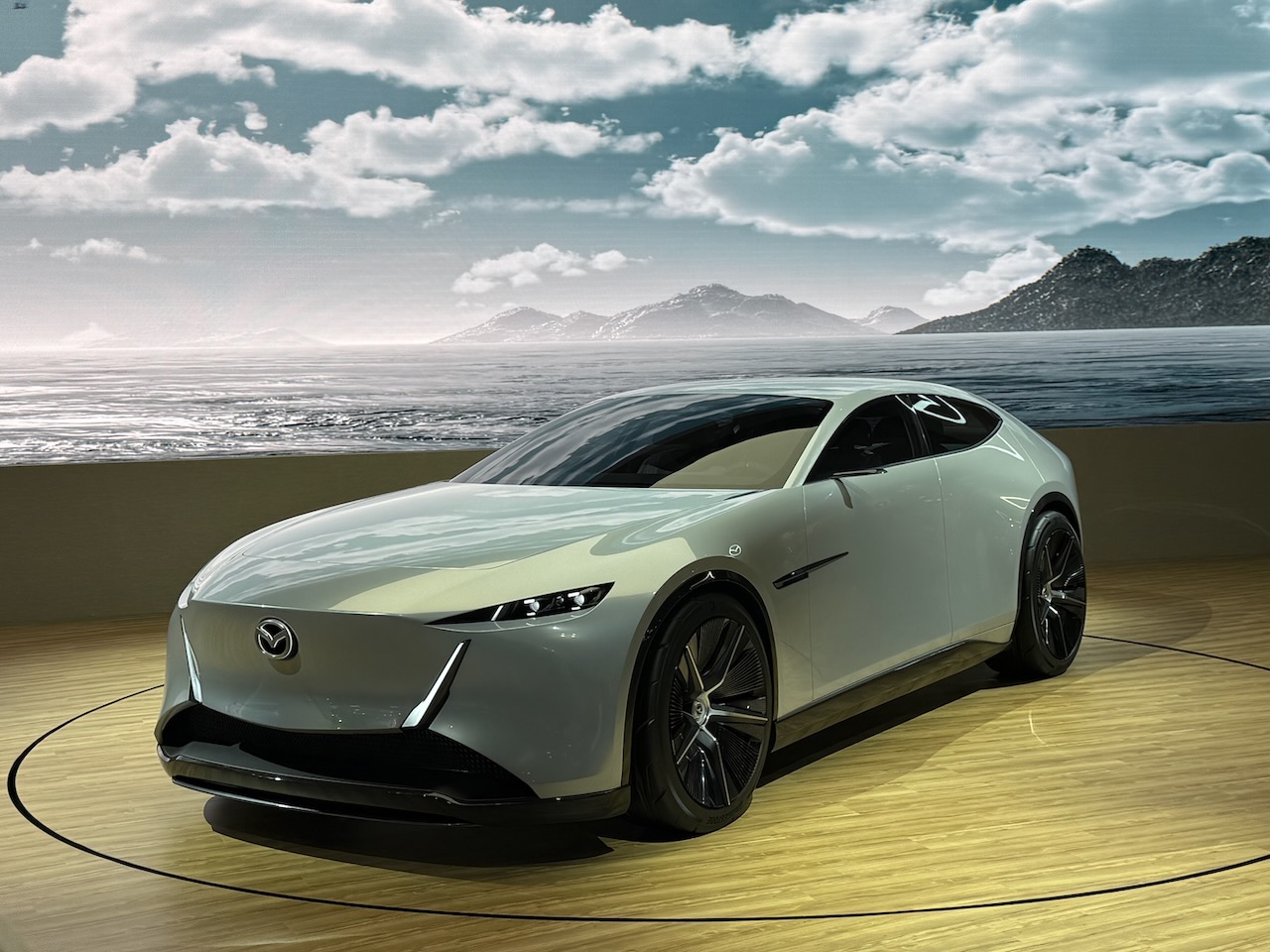
Mazda's Vision X-Coupe combines microalgae biofuel with carbon capture to create a carbon-negative vehicle that integrates with advanced IoT analytics.

Drivetech Partners
Mazda's Vision X-Coupe represents a groundbreaking approach to sustainable transportation, combining microalgae biofuel with innovative carbon capture technology to create a potentially carbon-negative driving experience. This revolutionary concept car showcases how alternative fuel systems could integrate with advanced IoT analytics to transform automotive monitoring and environmental impact tracking.
Key Takeaways
Mazda's Vision X-Coupe features a plug-in hybrid rotary engine running on microalgae biofuel with 503 horsepower and 497-mile range
The concept incorporates Mobile Carbon Capture technology that collects CO2 from exhaust gases, creating a potentially carbon-negative vehicle
Advanced real-time IoT analytics systems will be essential to monitor fuel efficiency, emissions, and carbon-capture performance
This technology will drive development of specialized real-time monitoring systems that integrate with smart city infrastructure
The alternative fuel vehicle market is projected to reach $3.5 trillion by 2050, with carbon-capture technologies growing to $200 billion
The Vision X-Coupe: Mazda's Carbon-Negative Breakthrough
Unveiled at the Japan Mobility Show 2025, the Mazda Vision X-Coupe represents a bold step in automotive sustainability. This four-door "coupe crossover" combines striking design with revolutionary technology, featuring a plug-in hybrid system powered by a turbocharged two-rotor rotary engine paired with an electric motor.
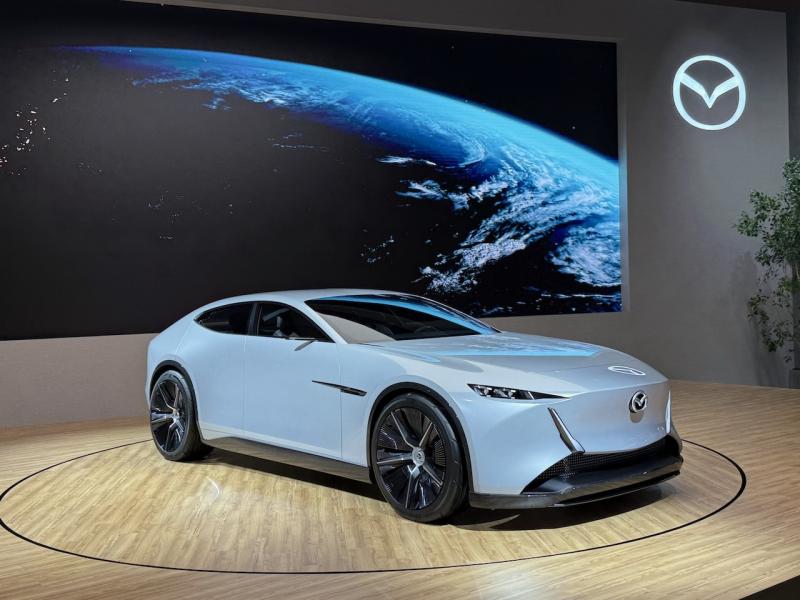
The performance figures are impressive: 510 PS (503 horsepower) with an electric-only range of 160 km (99 miles) and a combined range of 800 km (497 miles). The vehicle's dimensions give it a commanding presence on the road: 5,050 mm (198.8 inches) long, 1,995 mm (78.5 inches) wide, and 1,480 mm (58.2 inches) tall, with a wheelbase of 3,080 mm (121.3 inches).
What truly sets the Vision X-Coupe apart is its integration of Mazda's proprietary "Mobile Carbon Capture" technology. This system actively collects CO2 from exhaust gases, positioning the vehicle as a carbon-negative solution that actually reduces atmospheric carbon dioxide while driving. The design draws inspiration from Mazda's Kodo Soul of Motion design language, representing the future evolution of the current lineup while maintaining the brand's distinctive aesthetic.
Microalgae Biofuel: Nature's Answer to Carbon-Neutral Transportation
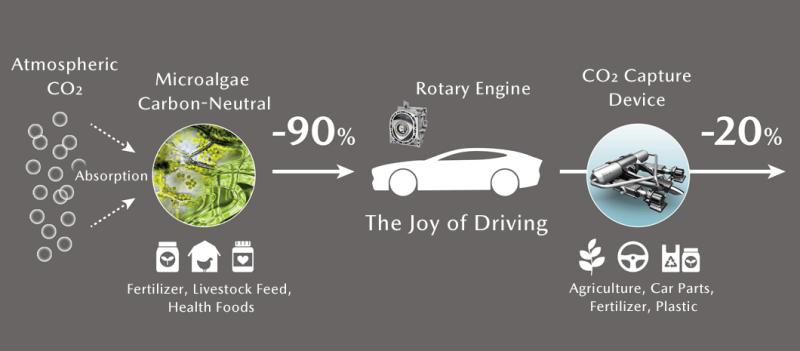
The Vision X-Coupe runs on carbon-neutral fuel derived from microalgae that naturally absorbs CO2 during its growth cycle. This innovative approach to fuel production creates a potentially closed-loop system for carbon emissions.
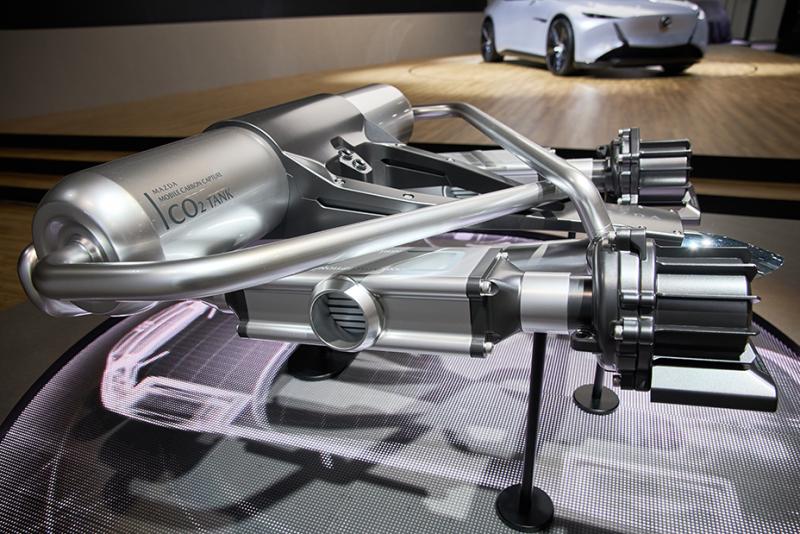
The production process is intensive, requiring approximately 11,000 liters of microalgae to produce just 1 liter of fuel within a two-week cycle. Despite this challenge, the environmental benefits are significant. The vehicle's Mobile Carbon Capture system collects exhaust CO2, which can then be repurposed for plant production or high-performance carbon materials.
Mazda plans to test the carbon-capture technology in real-world conditions through endurance racing with the Mazda 55, demonstrating practical applications beyond concept vehicles. This system creates potential for circular economy applications where captured carbon becomes input for new fuel production, further reducing the overall carbon footprint of transportation.
Automotive IoT Analytics: The Technological Backbone of Alternative Fuel Systems
The integration of microalgae biofuel and carbon-capture systems necessitates advanced IoT analytics for real-time monitoring. These sophisticated systems will track fuel efficiency, emissions levels, and carbon-capture performance metrics continuously, providing critical data for optimization and compliance.
IoT analytics ensures compliance with increasingly stringent environmental regulations while optimizing alternative fuel use. It also enables predictive maintenance specifically for carbon-capture devices and related components, extending their lifespan and ensuring optimal performance.
Leading platforms positioned to support these applications include AWS IoT Analytics, Telenor IoT Drive, and Bosch IoT Suite. The data collection will provide critical feedback to multiple stakeholders—drivers, fleet operators, and manufacturers—allowing for continuous system improvements and optimization.
New Monitoring Systems Driven by Alternative Fuels
Alternative internal combustion hybrid systems like the Vision X-Coupe's will accelerate development of specialized automotive monitoring systems. These systems will provide continuous data on vehicle performance, fuel consumption patterns, emissions, and carbon-capture efficiency.
The technology will support integration with smart city infrastructure for dynamic traffic management and environmental monitoring. Potential integration with automotive platforms like Tesla Autopilot, GM OnStar, and Volvo Core Compute could create comprehensive data ecosystems that benefit both drivers and urban planners.
Environmental Monitoring Segment Drivers
Regulatory shifts worldwide are prompting automakers and suppliers to invest heavily in real-time environmental analytics; these solutions are integrated into connected vehicles, manufacturing plants, and urban mobility systems.
Predictive analytics for emissions, fuel consumption, and real-time energy management are forecasted to underpin environment monitoring strategies from 2030 onwards, enabling OEMs to meet stricter carbon targets and optimize supply chains.
The rise of autonomous, electric, and shared vehicles creates new opportunities for sensor-driven monitoring, expanding the market for analytics platforms tailored to environmental factors.
Real-time analytics enables better decision-making for all stakeholders in the transportation ecosystem. It creates a foundation for more sophisticated environmental impact tracking at the individual vehicle level, potentially allowing for personalized carbon footprint monitoring and incentives for eco-friendly driving behaviors.
Market Projections: The Economic Impact of Alternative Fuel Vehicles (2030-2050)
The economic potential for these technologies is substantial. The global market for alternative fuel vehicles is projected to reach $1.5 trillion by 2030, expanding significantly to $3.5 trillion by 2050. Carbon-capture technologies in the automotive sector specifically are expected to grow to $50 billion by 2030 and $200 billion by 2050.
This growth will be driven by increasing regulatory pressure and rising consumer demand for sustainable transportation options. Technological advancements will continue to improve efficiency and reduce costs of alternative fuel systems, making them more accessible to mainstream consumers.
The market expansion significantly outpaces traditional internal combustion engine growth rates, representing a major shift in automotive industry priorities toward sustainable technologies. This transition will create new opportunities for innovation across multiple industries, from energy production to data analytics.
Regulatory and Environmental Implications
Microalgae biofuel vehicles like the Vision X-Coupe could reshape emissions regulations worldwide. Carbon-capture capabilities may create new carbon credit opportunities for manufacturers and drivers, potentially offsetting the higher initial cost of the technology.
Environmental impact tracking through IoT systems could enable new taxation and incentive models based on actual carbon reduction rather than estimated figures. Regulatory frameworks will need updating to account for carbon-negative transportation technologies, which current regulations may not adequately address.
This approach could accelerate transition away from battery-electric vehicles in regions where critical mineral supplies are limited. It may also create new environmental verification requirements to ensure carbon-capture systems function as claimed, preventing greenwashing and ensuring genuine environmental benefits.
The Road Ahead: Challenges and Opportunities
Despite its promise, this technology faces significant challenges. Scaling microalgae production represents a considerable hurdle, with the 11,000:1 ratio of algae to fuel posing production and resource constraints. Carbon-capture technology requires maintenance and infrastructure for processing collected carbon, adding complexity to vehicle servicing requirements.IoT systems need robust security protocols to protect critical vehicle performance data from potential breaches. Consumer education will be required to understand the benefits of carbon-negative transportation, as the concept differs significantly from both conventional vehicles and battery-electric alternatives.
However, these challenges come with significant opportunities. The technology creates potential for cross-industry collaboration between automotive, energy, and technology sectors. Perhaps most exciting is the potential to create entirely new business models based on carbon capture and utilization, turning what was once a waste product into a valuable resource.
Sources
Electrek - Mazda's Vision X-Coupe packs 500hp with rotary-powered twist
Edmunds - Mazda Vision X-Coupe Concept Debut First Look
MazdaUSA News - Mazda Presents World Premiere of Two Vision Models at Japan Mobility Show 2025
NetCarShow - Mazda 2025 Vision X-Coupe Concept
Car and Driver - Mazda Vision X-Coupe Gallery